500 Tourists Rescued by Boat During Greece's Devastating Wildfire Crisis
Massive Maritime Evacuation During Greece Wildfire Emergency
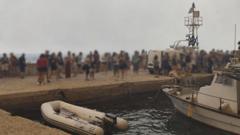
A Greece wildfire evacuation operation unfolded rapidly when approximately 500 individuals, predominantly international visitors, were transported to safety by maritime vessels from the coastal settlement of Agios Vasileios. The emergency operation represented a critical response to the spreading flames that had trapped tourists in the region, forcing authorities to implement immediate water-based rescue procedures.
Evacuation Operations at Agios Vasileios
The Greece wildfire situation escalated dramatically as thermal conditions worsened throughout the region. Residents and visitors found themselves increasingly isolated as advancing flames threatened populated zones, necessitating rapid deployment of naval resources. Local maritime authorities coordinated extensively to establish safe passage routes for the stranded population.
The evacuation vessels operated continuously, shuttling multiple groups from the endangered coastal district to secure locations. Safety officials prioritized the transport of elderly individuals and families with children first, ensuring vulnerable populations received immediate assistance during the crisis.
European Wildfire Pattern and Climate Context
The Greece wildfire outbreak represents part of a broader continental pattern affecting multiple European nations simultaneously. Weather systems characterized by elevated temperatures and reduced precipitation have created ideal conditions for rapid fire propagation across the Mediterranean region and beyond.
Meteorological agencies documented unprecedented thermal indices throughout southern Europe, establishing concerning parallels with previous catastrophic fire seasons. The combination of drought conditions, strong wind patterns, and elevated ambient temperatures has transformed vegetation into highly flammable material susceptible to rapid ignition.
Regional Impact and Ongoing Threats
Beyond Agios Vasileios, the Greece wildfire phenomenon continues threatening multiple communities scattered across the affected landscape. Regional authorities have maintained elevated alert statuses while coordinating firefighting resources across stretched emergency services.
Neighboring nations have similarly experienced significant fire activity, with firefighting teams from multiple countries deploying personnel and specialized equipment to combat the escalating situation. International cooperation mechanisms have been activated to provide mutual support and resource sharing.
Response and Recovery Efforts
Emergency management officials coordinated extensively throughout the evacuation process, ensuring communication networks remained operational and rescue personnel received real-time situational updates. The Greece wildfire response involved comprehensive coordination between coast guard units, municipal authorities, and regional emergency services.
Public health facilities in receiving areas prepared for potential casualties and established medical screening protocols. Supply distribution centers were rapidly established to provide temporary accommodation, food provisions, and essential support services for evacuated populations.
Environmental and Structural Implications
The scale of the Greece wildfire operation reflected the severity of threats posed to established infrastructure and natural ecosystems. Agricultural zones, residential properties, and forest reserves faced significant destruction risk, with ecological consequences extending beyond immediate fire zones through smoke dispersion and air quality degradation.
Insurance and disaster assessment teams commenced preliminary evaluations of property damage and structural losses. Documentation of affected regions proceeded simultaneously with recovery planning initiatives.
Looking Forward
The Greece wildfire evacuation will likely serve as a pivotal case study for maritime emergency response protocols. Ongoing monitoring of atmospheric conditions continues as authorities prepare contingency measures for potential additional emergencies throughout the extended fire season.
International disaster response frameworks have been reinforced based on operational lessons identified during the evacuation sequence. Climate researchers emphasize the necessity of comprehensive adaptation strategies across Mediterranean nations facing increasingly intense fire seasons.