Gaza Disarmament Plan Encounters Significant Hurdles Despite Offering Historic Opportunity
Hamas Disarmament Initiative Presents Complex Path Forward
A comprehensive Hamas disarmament plan for Gaza represents a transformative yet challenging prospect that emerges amid unprecedented regional tensions and humanitarian concerns. While the Hamas disarmament plan Gaza framework offers theoretical pathways toward sustainable peace, multiple layers of political, military, and social complications threaten to derail negotiations and implementation efforts.
The architectural foundation of any disarmament agreement must navigate treacherous terrain shaped by decades of mistrust, recent military escalation, and the profound suffering inflicted on civilian populations across Gaza. Stakeholders involved in crafting such an arrangement face the daunting task of reconciling fundamentally opposing objectives while addressing the devastating consequences already embedded in the region's recent history.
Political Realities and Negotiation Obstacles
The political dimension of Hamas disarmament involves intricate calculations from multiple parties with conflicting interests and security concerns. International mediators, regional powers, and local authorities must coordinate efforts despite their divergent strategic objectives. Each political faction brings deeply rooted ideological positions that historically resist compromise, creating significant friction within negotiation frameworks.
The absence of mutual confidence among negotiating parties represents perhaps the most formidable barrier to progress. Zero trust dynamics pervade discussions, where previous agreements have been violated or abandoned, reinforcing skepticism about future commitments. This fundamental breakdown in credibility extends from governmental institutions to armed organizations, making even preliminary confidence-building measures extraordinarily difficult to establish.
Military Dimensions and Security Concerns
Military realities in Gaza present tangible obstacles that transcend political positioning. The physical disarmament of armed organizations requires verification mechanisms, international oversight, and security guarantees that protect all populations involved. Creating such robust systems demands unprecedented cooperation between entities that currently view each other as existential threats.
The presence of extensive weaponry, underground tunnel networks, and decentralized command structures complicates verification efforts substantially. Military observers cannot easily confirm whether disarmament processes have been completed comprehensively or partially circumvented. These technical challenges intersect with political suspicion, amplifying doubts about implementation feasibility.
Human Cost and Reconstruction Imperatives
The deaths of thousands across Gaza have created profound grief, trauma, and desire for accountability that complicates any forward-looking agreement. Families seeking justice and recognition face pressure to compromise through mechanisms like truth commissions or transitional justice frameworks that may not satisfy demands for criminal prosecution. Balancing accountability with pragmatic peace-building remains fundamentally contentious.
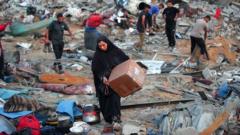
The destruction of Gaza's physical infrastructure—residential neighborhoods, hospitals, schools, and commercial establishments—demands massive reconstruction investment alongside political settlement. Any Hamas disarmament plan Gaza framework must simultaneously address humanitarian needs, economic rehabilitation, and infrastructure rebuilding. These resource-intensive requirements compete for international funding and attention.
Path Forward Despite Formidable Challenges
Despite numerous obstacles, the Hamas disarmament plan Gaza initiative represents genuine opportunity because alternative scenarios promise only continued suffering and instability. Stakeholders increasingly recognize that military solutions alone cannot achieve lasting security or address root causes of conflict. This recognition, while not guaranteeing success, provides rational foundation for persistent negotiation efforts.
International community engagement offers potential leverage for incentivizing compliance and protecting vulnerable populations during implementation phases. Economic inducements, security guarantees, and phased disarmament schedules could address legitimate concerns from multiple parties. Multilateral involvement reduces risks of individual parties exploiting agreements unilaterally.
Conclusion: Cautious Optimism Within Realistic Assessment
The Hamas disarmament plan Gaza represents genuinely unprecedented opportunity for regional transformation, yet architects of such agreements must proceed with clear-eyed recognition of substantial complicating factors. Political gridlock, military complexity, accumulated trauma, and infrastructure devastation create an extraordinarily difficult environment for implementing disarmament frameworks. Nevertheless, the alternative of perpetual conflict justifies sustained commitment to achieving breakthrough agreements that could fundamentally alter Gaza's tragic trajectory toward eventual peace, stability, and human dignity restoration.