US Exits UN Security Council Amid Human Rights Commissioner Dispute
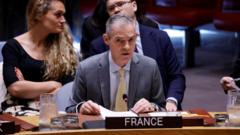
US Delegation Departs UN Security Council Session
A significant diplomatic incident unfolded at the United Nations when the United States left a UN Security Council meeting during France's statement, marking a notable moment of tension within the international body. The walkout reflected deepening disagreements among permanent members on critical human rights issues and institutional leadership.
The Voting Controversy Behind the Dispute
The confrontation escalated following a contentious vote regarding the extension of the UN high commissioner for human rights' mandate. The United States joined both Russia and North Korea in voting against prolonging the term of this influential human rights position, a move that drew sharp criticism from other council members.
This alignment between Washington, Moscow, and Pyongyang on a human rights matter proved particularly controversial, as it demonstrated rare coordination among traditionally opposing powers on a vote affecting the organization's human rights apparatus. The decision to oppose the extension represented a significant policy position that contradicted the diplomatic expectations of several other nations.
International Response and Tensions
France's remarks during the session apparently prompted the US delegation's departure, suggesting that the French position directly challenged American interests or policy objectives at the UN Security Council. The walkout itself served as a powerful non-verbal statement of disagreement, though specifics of France's remarks remained the focal point of diplomatic scrutiny.
Member states present at the session interpreted the American departure as a sign of escalating tensions within the Security Council, an institution already facing challenges with five permanent members frequently divided on major international issues. The incident underscored the difficulty of achieving consensus on human rights governance and institutional appointments.
Broader Implications for UN Leadership
The human rights commissioner position holds substantial authority over monitoring global compliance with international human rights standards. The decision to vote against its extension represented a critical juncture for UN operations and the organization's commitment to human rights advocacy at the highest levels.
By opposing the commissioner's term extension, the United States signaled potential concerns about the office's direction, priorities, or personnel. This position, despite alignment with Russia and North Korea, raised questions about American strategic interests and how Washington prioritizes various international governance mechanisms.
Protocol and Diplomatic Precedent
Walkouts from UN Security Council meetings, while not unprecedented, remain notable diplomatic gestures that signal serious disagreement or protest. The departure during France's remarks specifically suggested that the content of the French statement directly catalyzed the American response, rather than the vote itself serving as the sole trigger.
The incident reflects ongoing challenges within the Security Council regarding procedural norms, respect for speaking time, and the management of disagreements among permanent members. Diplomatic protocols at the UN balance transparency and procedural fairness with the political realities that often drive member state behavior.
Future Outlook for UN Security Council Relations
This episode likely influences future interactions between the involved parties and affects the broader diplomatic atmosphere within UN headquarters. The visible rupture in decorum and presence raises questions about whether established working relationships can recover from such public expressions of discontent.
Observers of international affairs watch closely as such incidents can either escalate tensions or serve as catalysts for eventual dialogue and negotiation. The UN Security Council's effectiveness depends partly on maintaining functional relationships among its permanent members, even when fundamental disagreements exist.