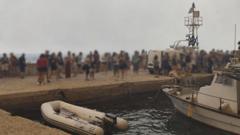
Thousands of Yemenis Cross Red Sea Fleeing Escalating Houthi War

Yemeni Refugees Escape War Through Perilous Red Sea Crossing
The ongoing conflict in Yemen has forced thousands of civilians to undertake dangerous journeys across the Red Sea in search of safety and refuge. As Yemeni refugees continue to flee escalating violence between Houthi forces and Saudi-backed coalition troops, many have made the difficult decision to seek asylum in neighboring Djibouti. These desperate crossings highlight the humanitarian toll of a war that has displaced millions and created one of the world's worst humanitarian crises.
The BBC's seasoned correspondent Frank Gardner has documented the harrowing experiences of those who have successfully navigated the treacherous waters separating Yemen from the Horn of Africa. Their testimonies reveal the devastating circumstances that drive families to risk their lives on the sea, abandoning their homes and possessions in pursuit of stability and basic survival. These stories underscore the urgent need for international attention and humanitarian assistance to address the escalating crisis.
Understanding the Scale of Displacement
Yemen's internal conflict has created unprecedented waves of displacement, with Yemeni refugees representing one of the largest displaced populations in the Middle East. The escalation between competing military forces has intensified over recent months, pushing more civilians to consider leaving their homeland. Djibouti, located across the Red Sea, has become a critical refuge point for those seeking to escape the violence that shows no signs of abating.
The journey itself poses significant risks. Boats are often overcrowded, navigation equipment is frequently unreliable, and maritime conditions in the Red Sea can prove treacherous. Despite these dangers, families continue to make the crossing, demonstrating the severity of conditions they face at home. The scale of this migration reflects broader regional instability and the failure of diplomatic efforts to establish lasting peace.
Personal Stories of Survival and Hope
Through Frank Gardner's reporting, the human dimension of Yemen's crisis becomes evident. Individual narratives of loss, resilience, and determination emerge from interviews with those who have successfully crossed the Red Sea. These accounts provide crucial perspective on the lived experiences of ordinary Yemenis caught between warring factions, illustrating how civilians bear the heaviest burden of armed conflict.
Many refugees describe fleeing with minimal belongings, leaving behind ancestral homes and community ties. The psychological toll of such displacement extends beyond immediate physical safety, encompassing loss of identity, economic hardship, and family separation. These personal testimonies serve as powerful reminders of conflict's human cost and the importance of supporting displaced populations.
The Humanitarian Response and Challenges
International organizations and humanitarian agencies have mobilized efforts to assist Yemeni refugees arriving in Djibouti and other neighboring countries. However, resources remain inadequate to meet overwhelming demand. The combination of limited funding, logistical constraints, and political complications makes comprehensive assistance difficult to deliver effectively to all those in need.
Host countries like Djibouti face considerable pressure managing influxes of refugees while addressing their own development needs. The international community must enhance support mechanisms and increase commitment to both immediate humanitarian aid and longer-term solutions that address root causes of displacement. Without sustained engagement, the crisis will continue devastating regional stability.
Regional Impact and Long-Term Implications
Yemen's internal conflict produces ripple effects throughout the broader Middle Eastern region. The displacement of Yemeni refugees strains neighboring nations' economies and infrastructure while creating security concerns. Regional powers must recognize that sustainable peace benefits all stakeholders and requires genuine commitment to diplomatic resolution rather than military escalation.
The stories documented by journalists like Frank Gardner serve vital functions, bringing international attention to crises that might otherwise receive insufficient coverage. Media reporting on Yemeni refugees crossing the Red Sea emphasizes the urgency of the humanitarian situation and mobilizes global consciousness about this ongoing tragedy affecting millions of people.
Path Forward for Yemen and Its People
Resolving Yemen's conflict requires multifaceted approaches combining military de-escalation, diplomatic negotiations, and comprehensive humanitarian support. Until sustainable peace emerges, Yemeni refugees will continue seeking safety across the Red Sea and through other migration routes. The international community must enhance its commitment to supporting affected populations and fostering conditions necessary for eventual return and reconstruction.
The experiences of those fleeing Yemen underscore fundamental human needs for safety, dignity, and hope. Their journeys across dangerous waters represent desperate choices made under impossible circumstances. Continued documentation and media coverage of these stories remains essential for maintaining international focus on Yemen's humanitarian emergency and supporting vulnerable populations displaced by endless conflict.