Police Drop Case Against Green Leader Over Guillotine Post
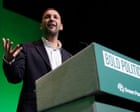
Police Decision on Guillotine Image Investigation
The Metropolitan Police has concluded its investigation into the guillotine image case involving Green Party leadership, announcing that no criminal charges will be pursued. The decision marks the end of a contentious investigation that captured public attention across the United Kingdom's political landscape.
The guillotine image that sparked the investigation depicted a photograph of an individual wearing a T-shirt displaying a guillotine graphic alongside the text "we're only making plans for Nigel." The image was shared by Zack Polanski, the Green Party's leader for England and Wales, prompting immediate scrutiny and demands for accountability from political rivals.
Green Leader's Response and Refusal to Apologize
Zack Polanski characterized the sharing of the Nigel Farage-referencing image as an "inadvertent mistake," suggesting the post was unintentional. Despite widespread calls for an apology to Farage, the Green Party leader has maintained his stance of refusing to offer formal regret for the incident. His position has remained consistent throughout the investigation process, indicating a defiant approach to the controversy.
Metropolitan Police Investigation Conclusion
Scotland Yard determined that the threshold required for criminal prosecution had not been reached in this matter. The police force's assessment suggests that while the image and its distribution were examined thoroughly, the evidence did not meet the legal standards necessary to pursue formal charges. This conclusion effectively closes the investigation without any charges being filed against Polanski.
Context of the Political Dispute
The incident occurred within an increasingly tense political environment between the Green Party and Reform UK, Nigel Farage's political vehicle. The sharing of the guillotine image represented a flashpoint in their ongoing rivalry, with the Reform leader's supporters viewing the post as threatening and inappropriate. The controversy highlighted broader tensions in contemporary British politics regarding the boundaries of acceptable political discourse on social media platforms.
Implications for Political Speech and Social Media
This case raises important questions about the boundaries of political expression in the digital age. The decision by the Metropolitan Police to take no further action suggests that while the image was provocative, it did not cross into territory that would constitute criminal behavior under British law. Nevertheless, the incident demonstrates how rapidly political disputes can escalate when inflammatory imagery is shared on social platforms.
The case also underscores the growing challenge for law enforcement agencies in determining what constitutes genuine threats versus controversial political expression. As social media continues to play an increasingly central role in political discourse, distinguishing between protected speech and criminal conduct becomes increasingly complex for judicial and law enforcement bodies.
Green Party's Position
The Green Party has defended their leader's actions through the lens of his "inadvertent mistake" claim. The party's position suggests that the sharing of the guillotine image was not premeditated or intended as a direct threat, but rather an unfortunate error in judgment. This narrative, however, has not satisfied critics who believe the image's implications warranted a formal apology.
Political Reactions and Ongoing Controversy
Reform UK and its supporters have expressed frustration with the police's decision to pursue no further action. Critics argue that the Nigel Farage reference inherent in the image makes the controversy about more than just sharing inflammatory content—it represents a targeted reference to a specific political figure. This interpretation of the incident continues to fuel debate among political observers and party supporters across the spectrum.
The closure of the investigation, while ending the formal criminal inquiry, has not necessarily resolved the political tensions between the parties involved. The incident remains a point of contention in broader discussions about political civility and the responsibilities of political leaders regarding their social media conduct.