Hundreds of Migrants Cross Waters to Reach Spanish Enclave of Ceuta
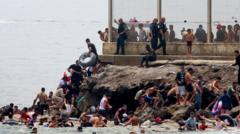
Mass Migration Surge: Hundreds Reach Ceuta from Morocco
A significant number of migrants have successfully made the crossing by swimming from Morocco to reach the Spanish enclave of Ceuta, creating an unprecedented challenge for local authorities. The migrant swim from Morocco to Ceuta represents one of the most notable mass movements across the Strait of Gibraltar in recent times, placing immense strain on the territory's infrastructure and social services.
Local Leadership Calls for Immediate Action
The chief administrator overseeing the territory has issued a stark warning about the situation, emphasizing that current migrants swim routes from Morocco to Ceuta are placing unsustainable pressure on essential resources. Infrastructure designed to accommodate standard population levels now faces severe strain as hundreds of individuals arrive simultaneously through dangerous water crossings.
Officials have characterized the influx as overwhelming, citing concerns about accommodation capacity, healthcare services, food distribution, and social welfare provisions. The territory's leader has made an urgent appeal to Spain's national government, requesting immediate intervention and additional support to manage the humanitarian and logistical challenges emerging from this mass arrival.
Impact on Local Infrastructure and Services
The sudden arrival of such large numbers has exposed vulnerabilities in Ceuta's support systems. Healthcare facilities report increased patient volumes, while temporary shelters have reached maximum capacity. Educational services and administrative processes have also felt the impact of this unprecedented surge in population.
Local authorities struggle to provide basic services while maintaining order and ensuring dignified treatment of arriving individuals. The resource constraints highlight the need for coordinated response mechanisms involving multiple governmental levels and international cooperation frameworks.
Regional and National Response Requirements
Spanish government representatives are examining protocols to address the escalating situation at this strategic Mediterranean location. The enclave, which serves as a crucial European entry point, continues witnessing irregular migration patterns driven by economic hardship, political instability, and humanitarian crises across North African regions.
Security personnel have been mobilized to monitor coastal areas and coordinate reception operations, though resources remain insufficient for addressing the scale of arrivals. Conversations between local officials and central authorities focus on implementing sustainable solutions that balance humanitarian obligations with territorial security concerns.
Broader Context of Mediterranean Migration
This event reflects broader patterns of irregular migration affecting European territories bordering North Africa. The Strait of Gibraltar represents one of the world's most dangerous maritime migration routes, where individuals undertake hazardous water crossings seeking improved living conditions and economic opportunities in European nations.
Environmental conditions, including water temperature and currents, create life-threatening situations for swimmers attempting the crossing from Morocco to Spanish territories. Despite these dangers, economic disparities and limited opportunities in origin countries continue driving migration attempts across this volatile waterway.
Future Planning and Coordination
Moving forward, authorities emphasize the necessity for comprehensive strategies addressing root causes of irregular migration while establishing managed immigration pathways. Coordination between Spanish regional governments, national authorities, and international organizations remains essential for developing sustainable approaches.
The situation underscores ongoing tensions between humanitarian responsibilities and capacity limitations facing European border territories. Solutions require resources, political commitment, and international cooperation to address both immediate needs and long-term migration management objectives.